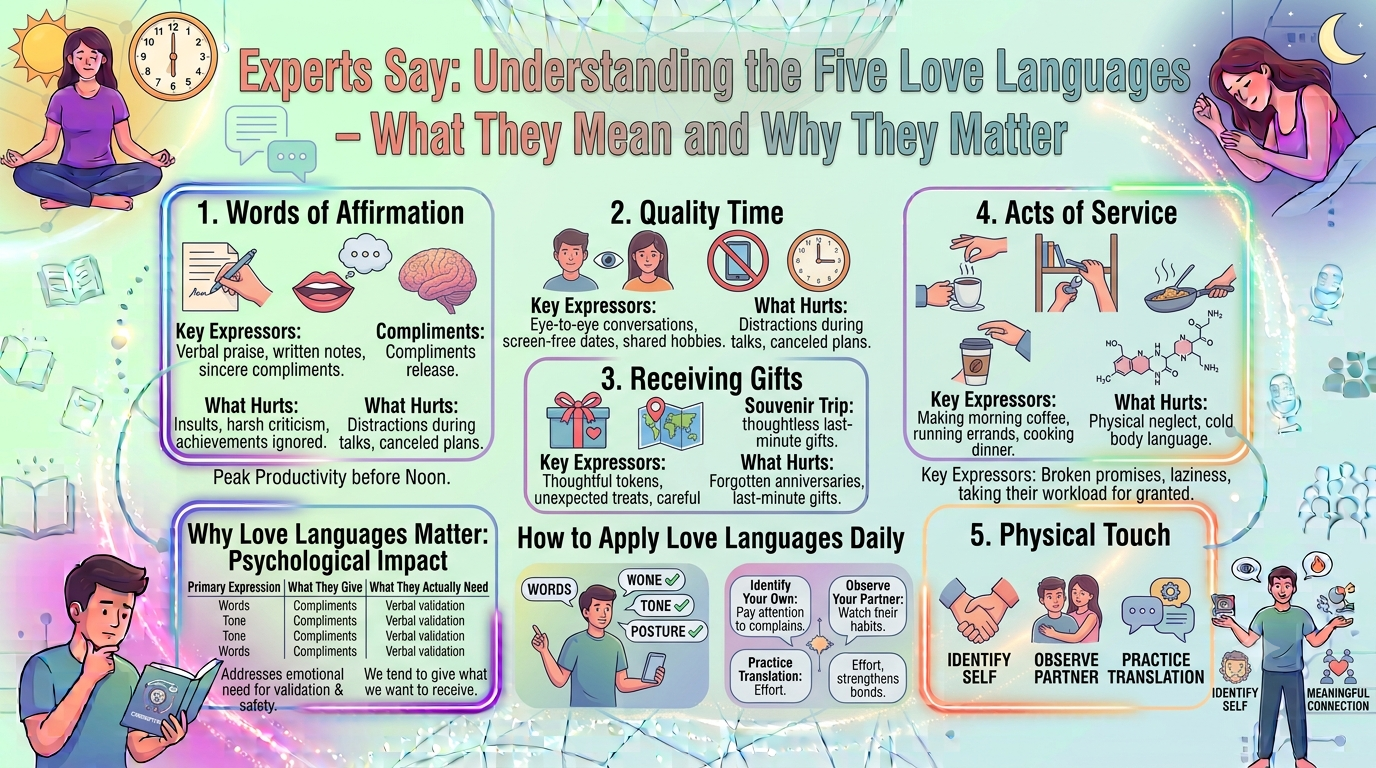
Have you ever showered a partner, friend, or family member with love, only for them to seem unimpressed or distant? Or perhaps someone constantly tried to show you affection in ways that felt completely uninspired to you?
Introduced by marriage counselor Dr. Gary Chapman in 1992, the concept of The 5 Love Languages addresses this exact disconnect. Chapman observed that partners rarely express love in the same way, leading to emotional miscommunication—even in relationships where deep affection exists. Understanding these communication styles allows couples and friends to express affection in ways that are actually felt and appreciated.
The 5 Primary Love Languages Explained
1. Words of Affirmation
For individuals with this love language, words carry immense weight. They feel most valued when receiving verbal compliments, words of appreciation, written notes, and explicit expressions of affection.
- Key Expressors: Verbal praise, unexpected text messages, heartfelt notes, and sincere compliments.
- What Hurts Them: Insults, harsh criticism, or having their achievements ignored. For this group, negative words are not easily forgotten.
2. Quality Time
This language is all about undivided attention. People who speak this language feel most loved when their partner is fully present—without screens, distractions, or competing priorities—enjoying shared experiences together.
- Key Expressors: Eye-to-eye conversations, uninterrupted dates, shared hobbies, and active listening.
- What Hurts Them: Distractions during conversations (like checking a phone), canceled plans, or feeling like an afterthought.
3. Receiving Gifts
Often misunderstood as materialism, this love language is actually about the thoughtfulness and effort behind the gesture. A gift serves as a tangible symbol that says, “I was thinking of you when I saw this.”
- Key Expressors: Thoughtful tokens, unexpected treats, souvenirs from trips, or carefully planned holiday gifts.
- What Hurts Them: Forgotten anniversaries or birthdays, thoughtless last-minute gifts, or a complete absence of physical gestures on special occasions.
4. Acts of Service
Actions speak much louder than words for people in this category. They feel cherished when their partner actively eases their daily burden by taking on chores, solving problems, or anticipating their needs without being asked.
- Key Expressors: Making coffee in the morning, fixing something broken, running errands, or cooking dinner after a long day.
- What Hurts Them: Broken promises, laziness, or feeling like their daily workload is taken for granted.
5. Physical Touch
People with this primary love language thrive on physical connection. It is not limited to intimacy; non-verbal, non-sexual touch—like hand-holding, hugs, and back rubs—releases oxytocin, making them feel secure and connected.
- Key Expressors: Holding hands, gentle touches on the arm, cuddling, hugging, and sitting close on the couch.
- What Hurts Them: Physical neglect, cold body language, or long periods without physical contact.
Why Love Languages Matter: The Psychological Impact
Psychologically, the love languages framework works because it addresses our emotional need for validation and safety.
We naturally tend to express love in the way we want to receive it. For instance, an “Acts of Service” person might wash their partner’s car to show love, while their “Words of Affirmation” partner is waiting to hear “I appreciate you.” When love languages clash, both partners feel unappreciated despite honest efforts.
| Primary Expression | What They Tend to Give | What They Actually Need |
| Words of Affirmation | Compliments & encouraging texts | Verbal validation & warm words |
| Acts of Service | Doing chores & fixing things | Help with daily responsibilities |
| Quality Time | Planning activities & trips | Undivided, screen-free attention |
How to Apply Love Languages in Daily Life
- Identify Your Own Primary Language: Pay attention to what you complain about most in relationships (e.g., “We never spend quiet time together”) or how you naturally express affection to others.
- Observe Your Partner’s Habits: Watch how they show love to you and others—it usually signals what they crave most in return.
- Practice Translation: Expressing love in a partner’s language takes intentional effort, especially if it doesn’t come naturally to you. Viewing it as a skill rather than a chore strengthens emotional bonds.
Conclusion
The Five Love Languages are not a rigid system for categorizing people, but rather a practical tool for improving empathy and communication. By taking the time to learn how those around you give and receive affection, you can translate good intentions into meaningful connection.